Tile shipments combine brittle surfaces, exposed edges, heavy cartons, color and size variation, and project-specific installation sequences. Packaging should reduce breakage and abrasion while keeping each tile type and production lot traceable. Buyers should also plan how pallets will be lifted, stacked, unloaded, inspected, and distributed at the destination.
Key takeaways
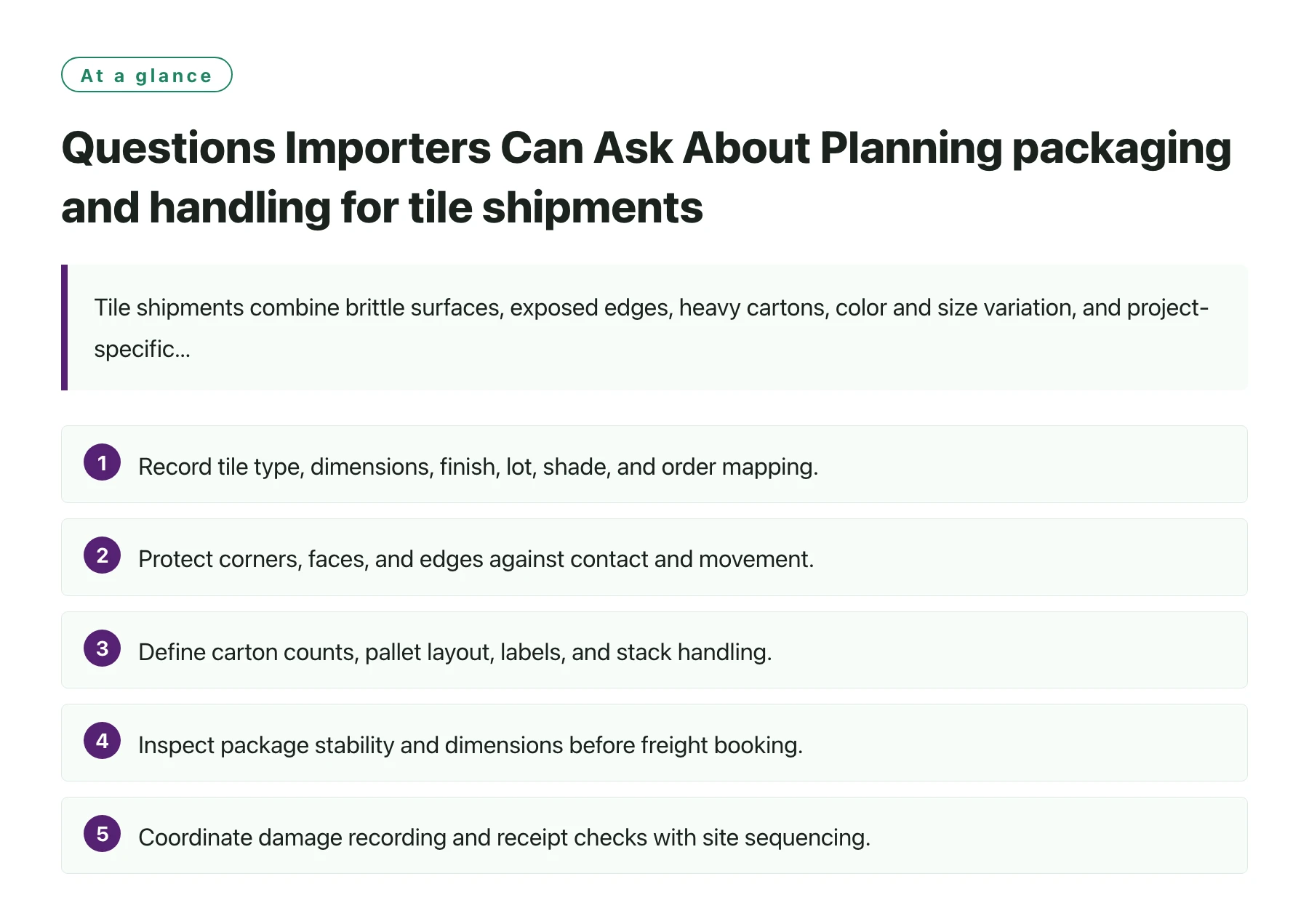
- Record tile type, dimensions, finish, lot, shade, and order mapping.
- Protect corners, faces, and edges against contact and movement.
- Define carton counts, pallet layout, labels, and stack handling.
- Inspect package stability and dimensions before freight booking.
- Coordinate damage recording and receipt checks with site sequencing.
A shipment-ready package protects the product while keeping lot and installation information readable from factory to jobsite.
1. Identify the tile and shipment mix
List tile model, material, size, thickness, surface finish, color or shade identifier, production lot, quantity, room or area, and installation phase. Distinguish floor, wall, mosaic, trim, and special pieces if their packaging or handling needs differ.
ISO 13006:2018 provides definitions, classification, characteristics, and marking for ceramic tiles within its scope. Use the edition and product requirements specified for the order; product classification does not define every transport package or jobsite handling method. [1]
2. Define carton contents and batch segregation
Specify pieces per carton, cartons per pallet, gross weight, dimensions, and whether packages may mix sizes, finishes, or production lots. Keep cartons from different shades or batches clearly separated unless the project explicitly allows mixing.
Match package labels and packing list to the tile schedule and destination area. If the site needs a specific room or floor sequence, identify cartons accordingly. Record spare quantity separately so receiving and installation teams can tell replacement stock from the planned count.
3. Protect faces, edges, and corners
Select separators and cushioning to prevent tile faces from rubbing and edges from striking adjacent pieces. Add edge and corner protection where handling or pallet contact could chip them. Consider surface finish and whether direct contact with wrap, ink, or adhesive could leave marks.
Check that individual pieces do not shift inside cartons. Avoid overpacking that creates concentrated pressure or makes cartons difficult to close. State how broken pieces, mixed fragments, or reworked cartons are identified and removed from conforming stock.
4. Select carton and pallet configurations
Define carton strength, pallet material, dimensions, deck condition, stack arrangement, strap or wrap method, and permitted overhang. Confirm weight distribution and forklift access. Packaging suppliers should validate the chosen configuration for the actual tile weight and carton format.
Use stable, square pallet stacks with labels visible on accessible faces. State whether pallets may be double stacked and under what conditions. Do not use an unsupported load limit; ask the packer to substantiate stacking instructions for the exact pack.
5. Manage moisture and surface condition
Clarify whether cartons, pallet covers, liners, or other barriers are needed for the planned storage and route. Keep the product dry and protected from contamination where relevant. Decide whether ventilation or sealed protection is appropriate for the package materials and expected exposure.
Record visible wetness, torn wrap, condensation, staining, or damaged barriers before loading. Packaging can reduce exposure but cannot guarantee a particular moisture condition after an unknown transit or storage event. Define what receiving staff should inspect and when damage should be escalated.
6. Plan lifting and handling instructions
Mark gross weight, orientation, fragile content, center of gravity where useful, lifting points, and handling precautions. Ensure instructions remain readable after stretch wrap or strapping. Identify whether pallets require clamps, forklift forks, crane handling, or manual movement.
Share package dimensions and weights with carriers and destination teams before booking. Verify equipment and access for loading dock, warehouse, elevator, and jobsite. Heavy or oversized loads may need specialist logistics review and controlled lifting procedures.
7. Fit the pack to route and freight plan
Use final production-intent carton and pallet dimensions to estimate volume, container utilization, weight, and handling requirements. Consider transshipment, consolidation, port handling, warehouse storage, and multiple unloading stages. Avoid calculating freight from bare tile dimensions.
If different suppliers’ pallets are consolidated, agree marks, counts, and segregation so tile lots are not mixed. Confirm who repacks goods and how the approved configuration is preserved. The delivery term and named place should match actual transportation responsibilities.
8. Inspect samples and production packaging
Ask for a packaging sample or photographs showing tile orientation, separators, carton label, pallet pattern, strapping, and wrap. Approve against a specific product, quantity, route, and revision. A sample package should represent ordinary production, not a specially reinforced one-off.
Before shipment, check carton count, pallet labels, visible damage, stack stability, packing list, and lot separation. If a package is opened for inspection, document how it was restored and whether its protection remains equivalent.
9. Prepare receiving and damage reporting
Plan delivery appointment, unloading equipment, storage area, inspection responsibility, and sequence for moving pallets to the installation area. Reconcile carton and pallet counts against the packing list before signing receipt. Photograph visible damage with marks and pallet context.
Define how concealed damage is reported after opening, what packaging should be retained, and who contacts the supplier or carrier. Identify damaged carton and tile quantities by product code, shade, lot, and location. Preserve labels to support replacement or claim review.
10. Coordinate responsibilities and improve the next shipment
Confirm who prepares and pays for packing, palletization, loading, and transport under the agreement. Incoterms® rules allocate specified delivery tasks, costs, and risks when incorporated; record operational packing details separately because the delivery term does not describe every protective layer or receiving step. [2]
Buyers planning JS Sourcing can tie packaging, inspection, shipment marks, and jobsite receiving to a shared tile schedule. Review breakage, handling time, extra freight, and installation shortages after delivery, then update pack specifications using observed evidence.
Sources
Frequently asked questions
Should different tile shades share the same pallet?
Keep lots identifiable and separated unless the project expressly approves mixed packing and traceability remains clear.
When should pallet dimensions be confirmed?
Measure a production-intent packed pallet before final freight planning, including wrap and overhang.
Can packaging prevent every breakage?
No. It reduces specified handling risks; route, loading, storage, and unloading still affect damage exposure.
What evidence helps with a tile damage claim?
Retain carton marks, lot identifiers, pallet photos, damage location, quantity, delivery record, and original packaging.